This workspace owns its records
Orders, payments, reports, and history stay attached to the business that created them.
Use the shared restaurant engine for dine-in, takeaway, delivery, reservations, table service, and the kitchen queue. Choose Restaurant or Bar / Lounge when you set up this workspace.
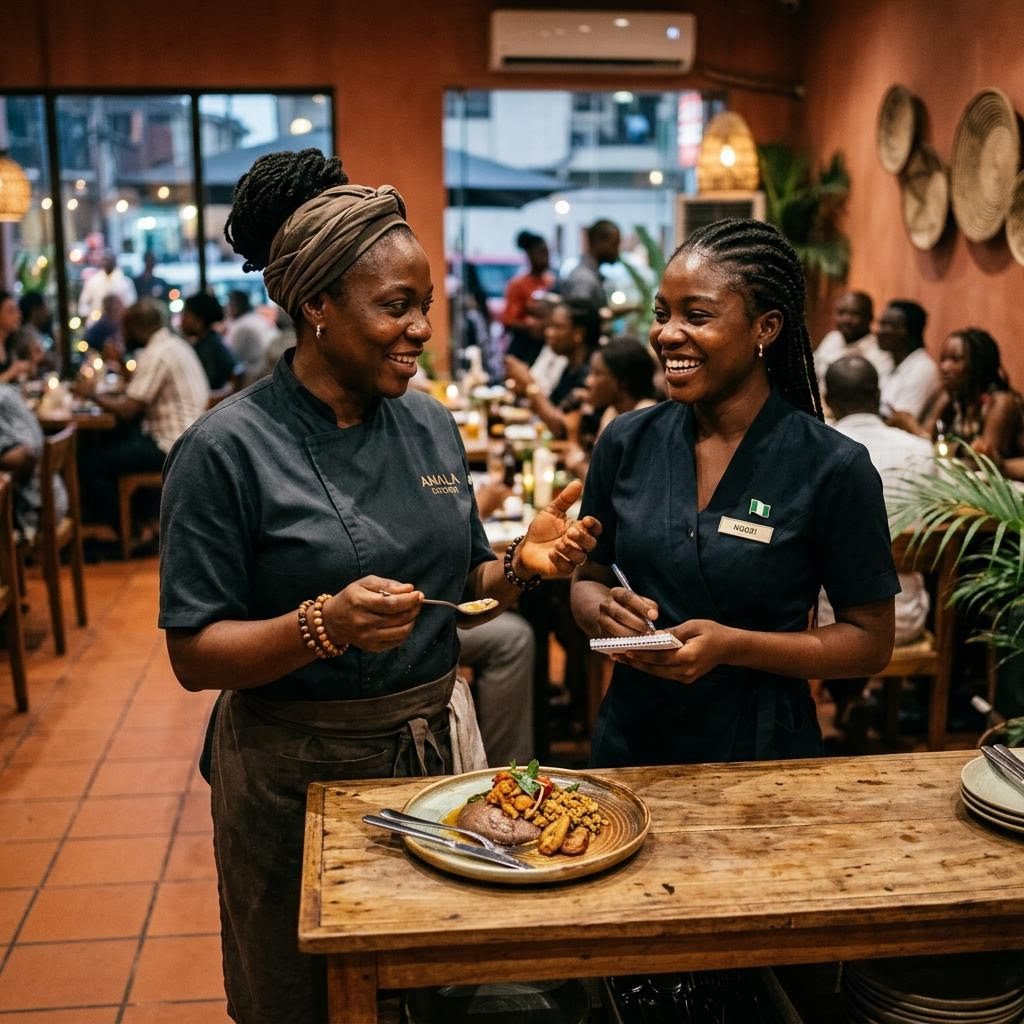
Your workspace begins with the right labels, building blocks, and room to grow.
Restaurant, bar, and lounge owners who need one clear service flow for the front of house and kitchen.
Use the shared restaurant engine for dine-in, takeaway, delivery, reservations, table service, and the kitchen queue.
Use the existing signup or create-workspace path to begin.
Restaurant or Bar / Lounge gets its own operational records and customer portal. If the same owner runs another workspace, the relationship can be connected by consent without exposing that business’s transactions here.
Orders, payments, reports, and history stay attached to the business that created them.
Consent can connect a customer identity across eligible owner workspaces without moving their history.
Customers see this business’s orders and payments here; another business remains a separate portal view.
Keep restaurant or bar / lounge work in KlarPoint while completed orders, payments, and adjustments move toward accounting-ready records with their business and source identity intact.
Keep the day’s customers, jobs, services, and payments in the category-aware workspace.
Business, branch, currency, tax, and source-record identity stay attached to the financial handoff.
Owners and bookkeepers get a better starting point without mirroring every operational detail.
Accounting connection is being introduced as a focused, auditable workflow—not a promise to copy the whole workspace.
From the first customer detail to the final handoff, keep the work visible with shared foundations and category-aware tools.
Keep contact details, notes, history, and relationship context together in one workspace.
Organise the services, products, or plans your team offers with category-aware language and optional VAT-inclusive or VAT-exclusive pricing.
Record payments and keep business and branch-level financial activity easy to follow. Historical order and invoice prices remain understandable after catalogue changes.
Keep locations separate while giving owners a clear way to manage the wider operation.
Give owners, managers, and staff access that matches the work they are responsible for.
Follow important account, staff, login, and operational changes through a dependable activity trail.
Capture menu orders with the fulfilment type, guest details, table selection, or delivery information your team needs.
Create tables, track seating capacity and availability, and keep active dine-in orders tied to the right table.
Give the kitchen a focused queue for new, preparing, ready, completed, and cancelled restaurant orders.
Use the restaurant menu configuration to add items and quantities quickly at the point of order.
Book, edit, and cancel guest reservations with table, time, party-size, and contact details.
Collect menu items ahead of arrival and carry the guest’s pre-order into table service.
Seat a reservation at the right time, convert it into a dine-in order, and keep the table state connected.
Keep the floor moving during internet disruptions with reliable offline service capabilities and clear sync visibility.
When you create this workspace, KlarPoint applies the category’s terminology, suggested modules, and initial workflow statuses. You can then shape the business details around your operation.
Keep guests and relationship context together.
Organise the menu your team works from.
Track each order through its working stages.
Record payment activity and keep the financial handoff visible.
Organise meal plans alongside the service flow.
Keep locations distinct while the owner view stays connected.
Capture a dine-in, takeaway, or delivery order, move it through kitchen preparation, and keep the guest, table, and service state connected. Restaurant and Bar / Lounge are operating styles on the same engine; the selected style changes the working language, not the shared foundation.
Choose this category when you create your business and get configuration that reflects how you describe the work.